By definition, green is the combination of blue and yellow. I don’t suppose, however, this definition would do much for an individual who has never seen green. Or perhaps, an individual who has seen green, but never identified it. An identification of what green is composed of, then, is not nearly so helpful as an explanation of where green is to be found or how it is commonly experienced. Green, on a color wheel, is in between blue and yellow. Green is also the color of a daisy stem. 

Describing ideas or systems by their input instead of their functions is to highlight one’s own lack of understanding of said idea or system. I think about this every time I am asked what I studied in college. I studied cognitive science. When I tell this to my inquiring conversation mate, it is as though I have told them I majored in green. 

What is the color green? They ask. 

Well, cognitive science is the interdisciplinary, scientific study of the mind, brain, and intelligence. “It is the cross between blue and yellow,” I respond. I studied blue things and then I studied yellow things, so now I suppose I am an expert in green things. So the conversation ends with them confused and disinterested, and me with an increasingly growing dissatisfaction with how cognitive science is understood and taught. 

Introduction

If language shapes thought, then how we refer to–and therefore understand–cognitive science as a discipline is a matter of great importance. Blaise Aguera y Arcas, author of What Is Intelligence? considers us to be on the precipice of “a major evolutionary development.” The development in question being the mutual beneficial relationship between humans and technology. The root of cognitive science–and how exactly it has brought about the blossoms of artificial intelligence–is something that I have studied throughout undergrad but never understood. And this is the problem. 

Cognitive science, like green, cannot solely be described via its input. Both are greater than the sum of their parts. I will argue that cognitive science involves an acute understanding of not only content, but connection and stakes. Meaning that of course cognitive science involves a myriad of pre-defined sub-disciplines. But that is not what it is. It is not math or neuroscience or computer science or even the vague “combination of all three.” Cognitive science is the collection of functions that can be found in each of the disciplines, applied to different things in the same way. In his understanding of what intelligence and life have in common, Arcas adds “Our growing understanding of life as a self-reinforcing dynamical process boils down not to things, but to networks of mutually beneficial relationships. At every scale, life is an ecology of functions.” Functions, then, are what make cognitive science beautiful. Or better yet, they simply are what makes cognitive science.

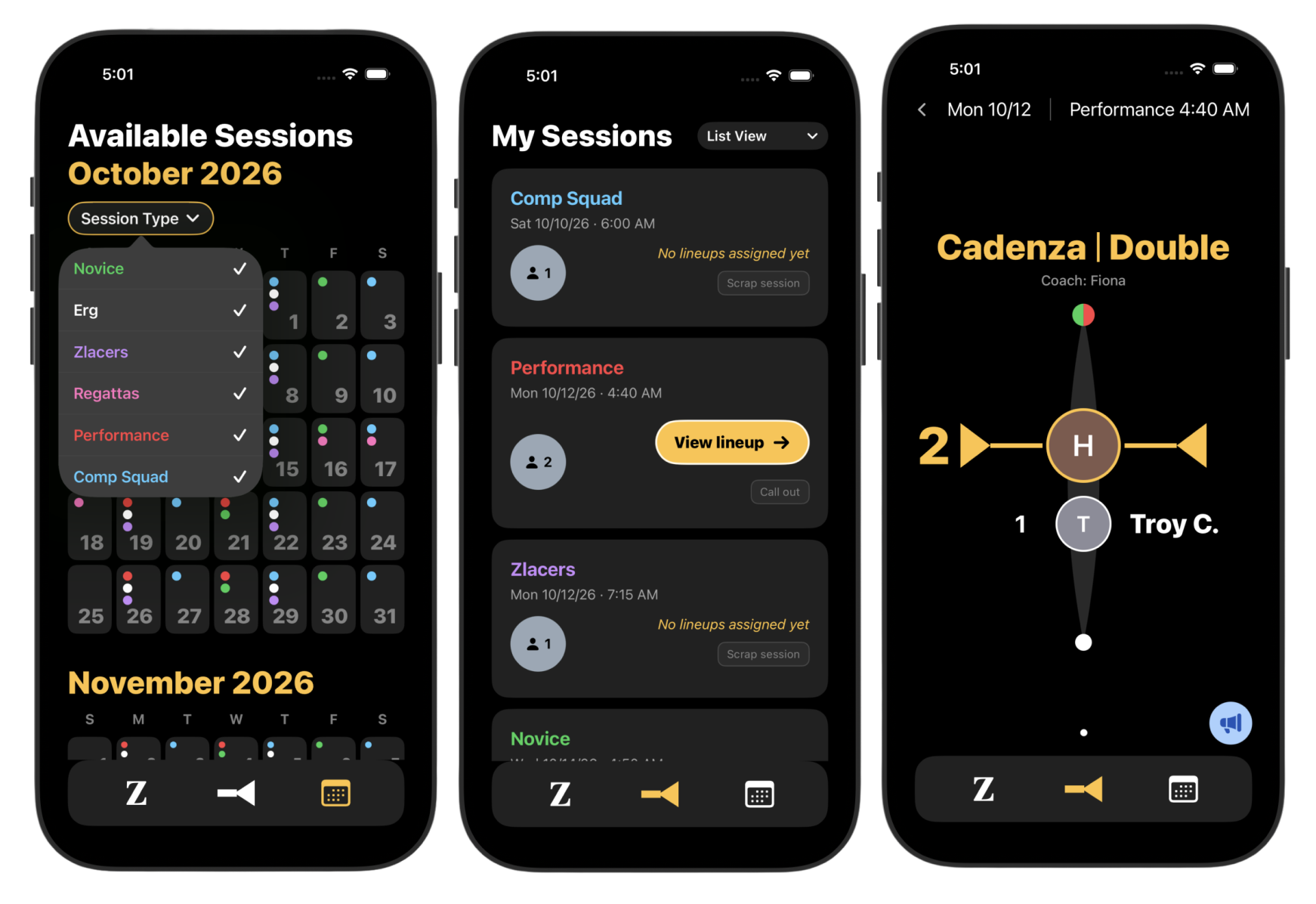
As a former D1 rower, an avid shell collector, and a cognitive science graduate of UC San Diego, I've become increasingly fascinated by understanding what the discipline of cognitive science is responsible for so I can go about defining what types of intelligences are artificial. To answer both questions, I have two case studies of my own making: an human designed and AI engineered app, Splyt, used for the longest-running all-women's rowing crew in the world, and a quilt built from the Fibonacci sequence that explores the epistemic and causal foundations of what we know to be cognitive science.

Functions All the Way Down

Redefining Cognitive Science for an Age of Artificial Intelligence

Jaime Church